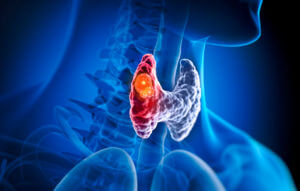
In short, even low levels of radiation exposure, particularly during childhood, can significantly increase thyroid cancer risk. Individuals living downwind of nuclear test sites face elevated risks due to radioactive iodine-131 exposure.
- Childhood exposure matters most. Young thyroid glands are highly sensitive to radiation, with even small doses potentially causing cancer decades later.
- Distance from nuclear tests affects risk. Communities downwind of testing sites experienced higher radiation exposure through contaminated air, water, and food supplies.
- Compensation may be available. If you developed thyroid cancer after living near nuclear test sites, you may qualify for federal compensation under the Radiation Exposure Compensation Act (RECA).
Thyroid cancer radiation exposure remains a critical health concern for thousands of Americans who lived near nuclear testing sites during the Cold War era. Between 1945 and 1962, the United States conducted over 200 atmospheric nuclear weapons tests, releasing massive amounts of radioactive materials into the environment. Communities in Nevada, Utah, Arizona, New Mexico, and Idaho bore the brunt of this contamination, earning the designation “downwinders.”
This article examines the scientific evidence linking radiation exposure to thyroid cancer, explores the unique vulnerabilities of downwinder communities, and provides guidance for those seeking compensation for radiation-related illnesses.
Understanding Radiation and Thyroid Cancer
Radiation exposure occurs when energy passes through the body and damages cellular structures, particularly DNA. The thyroid gland concentrates iodine from the bloodstream to produce essential hormones. Unfortunately, this biological mechanism cannot distinguish between stable iodine and radioactive I-131.
When nuclear weapons detonate, they release various radioactive isotopes. I-131 presents a particular danger because it vaporizes easily, travels long distances through wind currents, and settles on vegetation consumed by livestock. This creates a contamination pathway from fallout to grass to milk to humans, particularly children who consume more dairy products relative to their body weight.
The latency period between radiation exposure and thyroid cancer diagnosis typically ranges from 10 to 40 years. This extended timeline has made it challenging for affected individuals to connect their illness with past environmental exposures, particularly when those exposures occurred during childhood.
How Radiation Damages Thyroid Cells
Radioactive iodine emits beta particles and gamma rays as it decays within thyroid tissue. These emissions break chemical bonds in DNA molecules, creating mutations that can transform normal cells into cancerous ones. The thyroid’s high metabolic activity and rapid cell division increase the likelihood that radiation-induced damage will propagate through successive generations of cells.
Younger individuals face substantially higher risks because their thyroid cells divide more frequently during growth and development. A study found that children under five years old exposed to 1 gray (Gy) of radiation had approximately 7.7 times the thyroid cancer risk compared to unexposed children.
Radiation Dose and Cancer Risk
Scientists measure radiation exposure in several units. The gray (Gy) measures absorbed dose, while the sievert (Sv) accounts for biological effectiveness. For thyroid tissue exposed to I-131, these measurements are roughly equivalent.
Research has established that thyroid cancer radiation exposure risk increases proportionally with dose. However, no completely safe threshold exists. Even exposures below 0.1 Gy can elevate cancer risk, particularly in children.
Evidence From Nuclear Testing Communities
A comprehensive study examined thyroid cancer rates in populations exposed to Nevada Test Site fallout. Researchers estimated that approximately 49,000 excess thyroid cancer cases occurred in the United States due to I-131 exposure from atmospheric nuclear testing. The study calculated individual dose estimates based on factors including:
- Geographic location during testing years
- Birth year and age during exposure periods
- Dietary patterns, particularly milk consumption
- Duration of residence in affected areas
Individuals living in counties directly downwind of the Nevada Test Site during the 1950s and early 1960s received substantially higher radiation doses than the general population. Some communities experienced cumulative thyroid doses exceeding 1 Gy, particularly among children who consumed locally produced dairy products.
Military Personnel and Atomic Veterans
Military personnel who participated in nuclear weapons testing or atmospheric cleanup operations also face elevated thyroid cancer risks. These individuals often received concentrated exposures during brief periods of intense radiation release.
Unlike civilian populations whose exposure occurred primarily through environmental contamination over extended periods, military personnel sometimes worked in close proximity to test sites immediately following detonations.
Vulnerable Populations and Risk Factors
While radiation exposure affects everyone, certain populations face disproportionate risks. Children represent the most vulnerable group because their rapidly developing thyroid glands concentrate I-131 more efficiently than adult glands. Additionally, children have longer life expectancies, providing more time for radiation-induced cancers to develop.
Gender also influences thyroid cancer risk. Women develop thyroid cancer at approximately three times the rate of men, even with equivalent radiation exposure. Scientists believe hormonal factors contribute to this disparity, though the precise mechanisms remain under investigation.
Geographic Distribution of Risk
Downwinder communities experienced varying radiation exposure levels based on prevailing wind patterns, precipitation events, and distance from test sites. Counties in southwestern Utah, northern Arizona, and eastern Nevada received the highest cumulative doses. Rural agricultural communities faced additional risks because contaminated vegetation entered the food supply through livestock.
The federal government’s atmospheric testing program at the Nevada Test Site released an estimated 150 million curies of radioactive iodine-131 into the environment. Wind patterns carried radioactive plumes hundreds of miles from test sites, depositing fallout across vast regions of the western United States.
Some communities downwind of the Nevada Test Site received radiation doses comparable to those experienced by populations living near Chernobyl following that disaster.
Symptoms and Diagnosis of Thyroid Cancer
Thyroid cancer often develops without early symptoms. Many individuals discover thyroid nodules during routine physical examinations or imaging studies performed for unrelated conditions. As tumors grow, they may produce noticeable neck lumps, difficulty swallowing, voice changes, or a persistent cough.
Medical professionals diagnose thyroid cancer through several methods. Physical examination identifies palpable nodules. Ultrasound imaging reveals nodule characteristics that suggest malignancy. Fine-needle aspiration biopsy provides a definitive diagnosis by examining cellular samples under microscopy.
Four main types of thyroid cancer exist. Papillary thyroid cancer, the most common form, accounts for approximately 80% of cases and generally responds well to treatment. Follicular thyroid cancer comprises about 10-15% of cases and also has a favorable prognosis. Medullary and anaplastic thyroid cancers are less common but more aggressive.
Treatment Options and Prognosis
Treatment typically involves surgical removal of part or all of the thyroid gland. Radioactive iodine therapy may follow surgery to eliminate remaining cancer cells. External beam radiation and chemotherapy serve as additional treatment options for advanced cases.
Survival rates for thyroid cancer remain generally favorable, particularly for papillary and follicular types diagnosed at early stages. However, treatment often requires lifelong thyroid hormone replacement therapy and regular monitoring for recurrence.
Legal Recognition and Compensation
The federal government acknowledges the harm caused by atmospheric nuclear testing through the Radiation Exposure Compensation Act (RECA). This legislation provides compensation for individuals who developed specific cancers, including thyroid cancer, after living in designated geographic areas during testing periods.
Thanks to the historic 2025 expansion, RECA now covers downwinders who resided for at least 12 months in all of Utah, New Mexico, and Idaho, as well as designated counties in Arizona, Nevada, and Colorado during the testing periods. Eligible individuals who developed thyroid cancer or other covered conditions may receive $100,000 in compensation.
Expanding Recognition of Affected Communities
Following decades of advocacy, RECA was officially expanded in July 2025 to finally include previously excluded communities. Residents of New Mexico, Idaho, all of Utah, and additional regions who experienced fallout from nuclear testing are now fully eligible for federal compensation.
This historic legislative victory increased downwinder compensation amounts to $100,000 and recognized the widespread health impacts of nuclear testing, but claimants must file before the strict December 31, 2027, deadline.
Take Action if You May Be Affected by Thyroid Cancer from Radiation Exposure
If you lived in areas downwind of nuclear test sites during the Cold War era and subsequently developed thyroid cancer, you may qualify for compensation. Gathering documentation early strengthens your claim and expedites the application process.
The team at Downwinders® specializes in helping radiation exposure victims navigate the RECA claims process. Our experience with these complex cases can help you determine eligibility, gather necessary documentation, and submit a complete application. Registration and initial consultation are free, allowing you to explore your options without financial risk.
Take the first step today by filling out our form to schedule a free consultation.

